

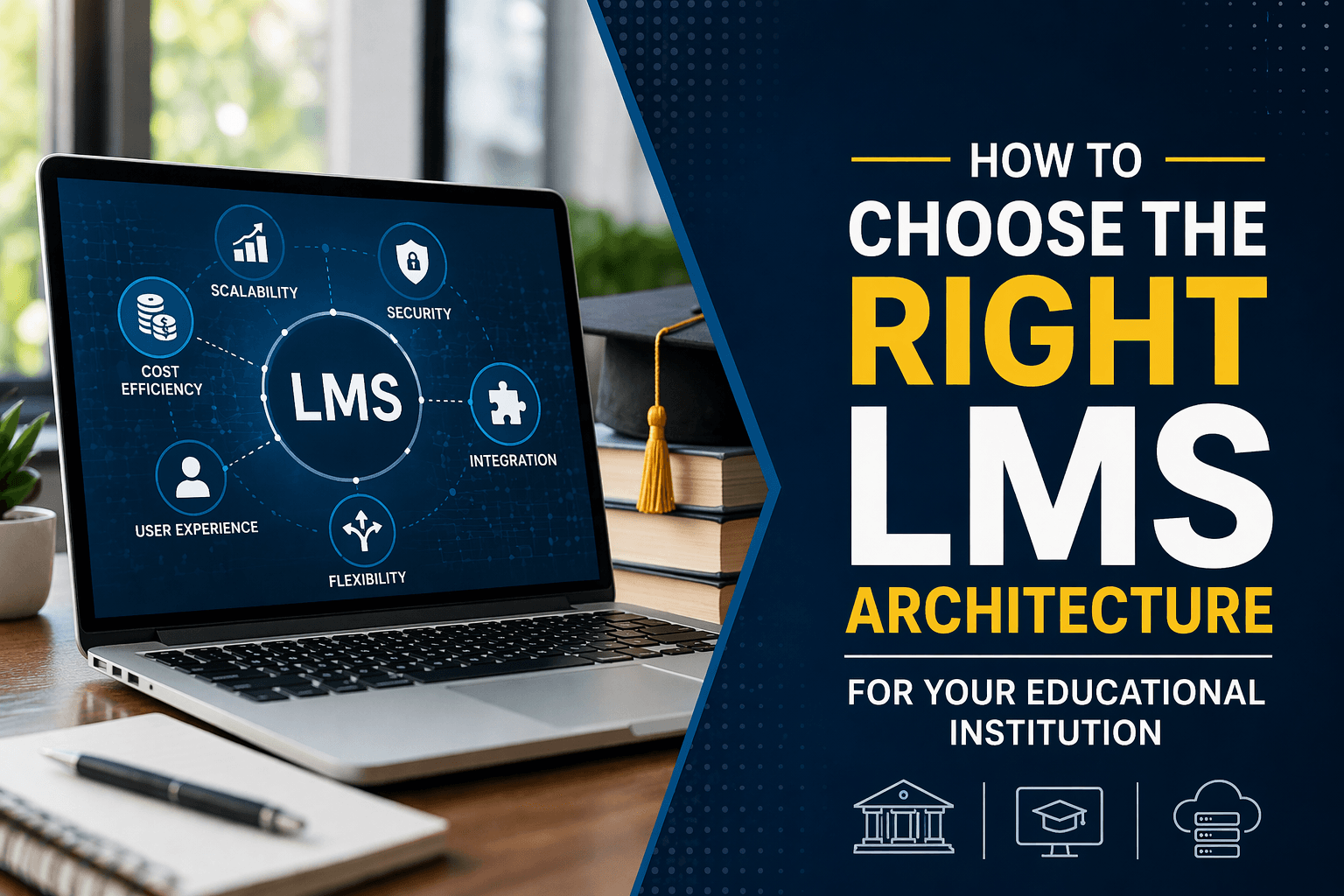
How to Choose the Right LMS Architecture for Your Educational Institution.
I
n the rapidly evolving landscape of digital education, choosing the right Learning Management System (LMS) is crucial for any educational institution, from K-12 schools to large universities. The core of an effective LMS lies not just in its feature set, but crucially in its underlying architecture. A robust and scalable LMS architecture ensures that the platform can handle growing numbers of users, provide a seamless user experience, and support various learning models and technologies.
Understanding LMS architecture involves grasping the fundamental structure and components that enable the system to function effectively. The right architecture can make or break your institution's e-learning initiatives.
LMS Category
Not all LMS platforms are designed for the same use case. Your requirements reveal what type of LMS you need. The LMS landscape generally includes three main categories:
Academic LMSs – Designed for formal education settings with features like grade books, assignments, and instructor-led course management.
Professional Development LMSs – Used by organizations to train internal staff, often with user segmentation by role, department, or job level.
B2C Sales LMSs – Built for delivering learning to external audiences. These platforms often support public course catalogs, marketing tools, and integrated shopping carts.
Why Selecting the Right LMS Is Crucial
The LMS you choose becomes the digital foundation of your institution’s learning experience. It affects everything from how instructors teach to how students engage and succeed.
Centralized Course Management
A well-chosen LMS allows faculty to organize course materials, assignments, assessments, and communications in one place. This helps ensure consistency across departments and simplifies access for students.
Improved Student Engagement
Interactive tools like discussion forums, embedded media, and real-time quizzes help keep students involved in their learning—especially in hybrid and online formats.
Efficient Time Management for Instructors
With features like automated grading, integrated calendars, and streamlined feedback workflows, instructors can focus more on teaching and less on administration.
Data-Driven Decision Making
Built-in analytics dashboards provide instructors and administrators with valuable insights into student performance, engagement trends, and learning gaps—allowing for timely interventions and curriculum improvements.
Flexible Delivery Across Learning Models
Whether your institution is fully remote, in-person, or hybrid, the right LMS supports your delivery model with mobile access, asynchronous options, and seamless integration with other digital tools.


0 Comments
Leave a Comment
Your email address will not be published. Required fields are marked *